
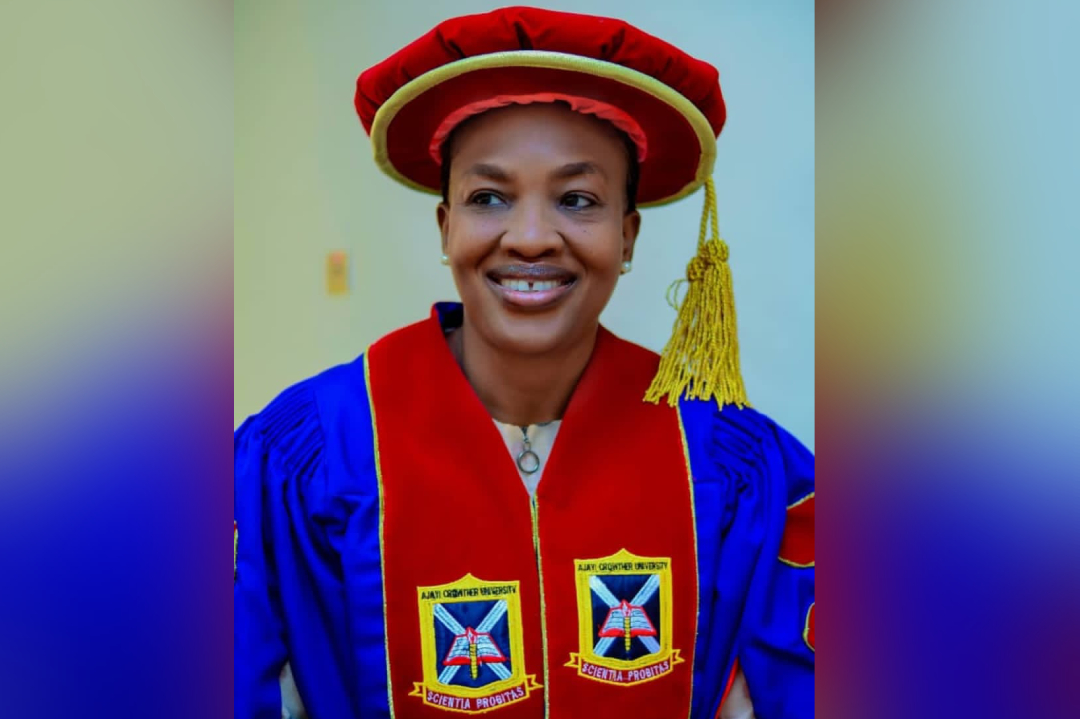
Prof. Olanbiwonninu Wins Major Grant to Tackle Malnutrition in African Women, Children
Prof. Afolake Olanbiwonninu of Ajayi Crowther University (ACU), Oyo, has been awarded a significant international research grant to combat critical health and nutrition issues facing African women and young children.
The funding comes from the Danida Fellowship Centre (DFC) in collaboration with the Technical University of Denmark’s National Food Institute.
The grant, valued at over 1.1 million Danish Kroner for ACU, is titled “Triple-Duty Indigenous Synbiotics to Sustainably Alleviate Health and Nutrition Challenges for African Perinatal Women and Children under Five (TRIPLE-SYNBIO).”
Scheduled to run for five years (April 2026 – March 2031), the project will focus on harnessing locally sourced beneficial microbes and food systems to develop sustainable, culturally relevant nutritional solutions for perinatal women and children under five – a group particularly vulnerable to malnutrition and related health complications.
Leading the research as the Principal Investigator, Prof. Olanbiwonninu, who is also the Deputy Vice-Chancellor (Academic) is a renowned expert in food microbiology and microbial biotechnology. The grant also includes funding to train a PhD student, strengthening ACU’s research capacity.
It is worth noting that this is not the first such grant Prof. Olanbiwonninu has won for the university. Fresh in our memory is the Global Alliance for Improved Nutrition (GAIN) and ECOWAS grant worth $10,000, won in conjunction with Dr. Theresa Awotundun of the Faculty of Natural Sciences, as well as the $2,000 AMI Summer Studentship Grant, designed to support undergraduate students in conducting microbiology-related research projects during their summer break.
University Management, led by Prof. Ebunoluwa Oduwole, has congratulated Prof. Olanbiwonninu on this achievement, describing the grant as a major milestone that reinforces ACU’s growing global reputation for impactful, homegrown innovation.
Furthermore, this achievement underscores the university’s commitment to solving Africa’s public health challenges through cutting-edge, culturally relevant science.