Faculty of Law Lecture: Legal Scholar Advocates Ethics and Tech Transformation
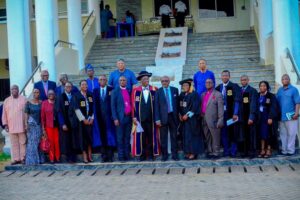
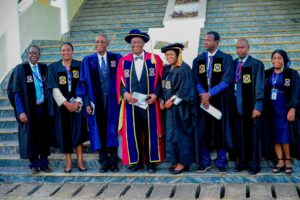
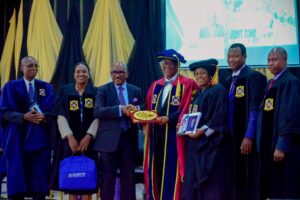
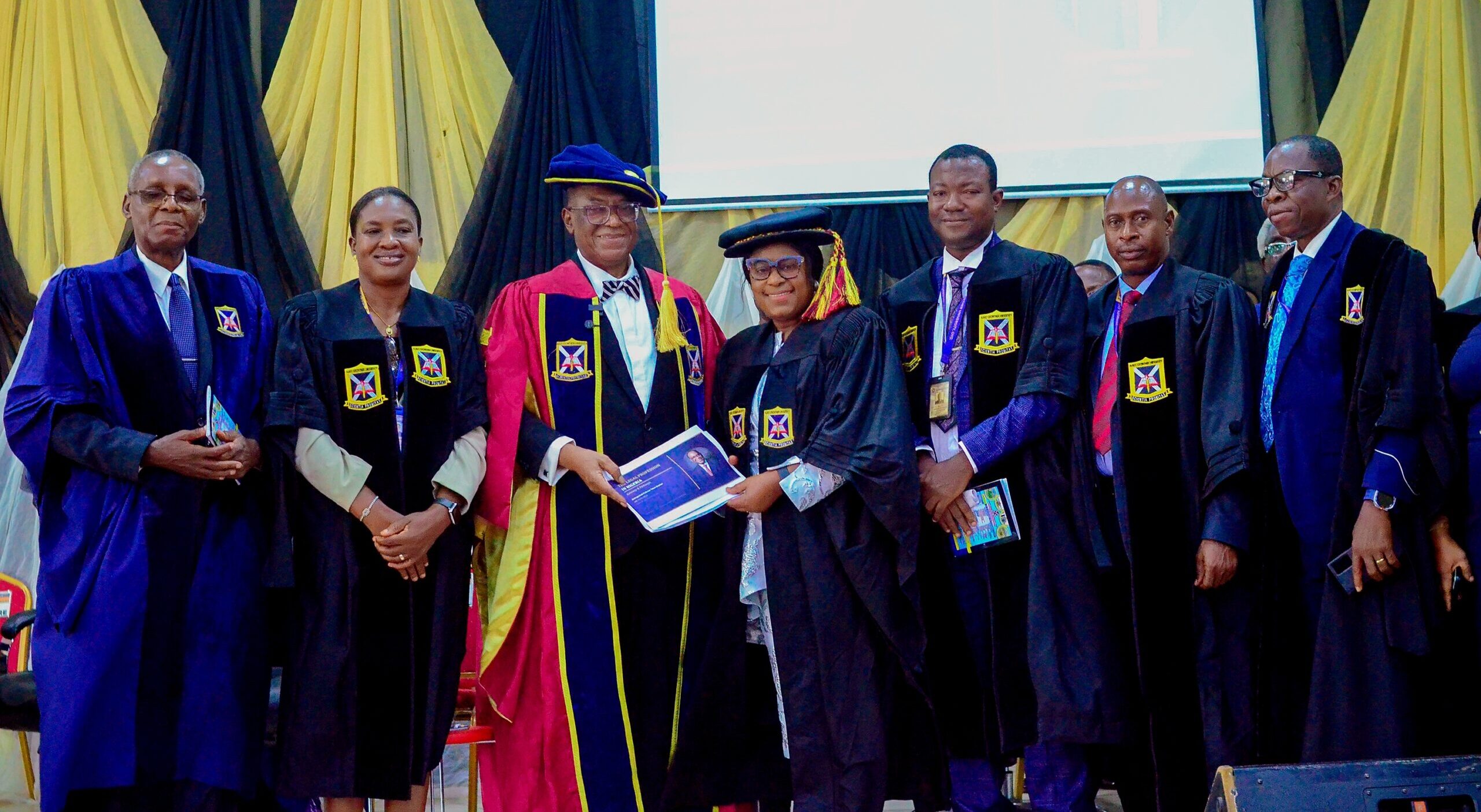
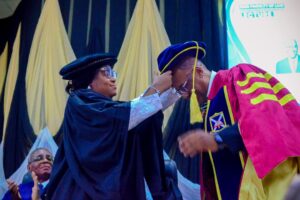
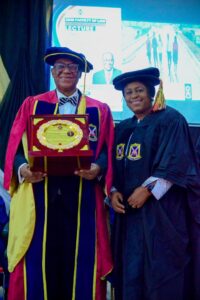
The Modupe and Folorunso Alakija Faculty of Law, Ajayi Crowther University (ACU), Oyo, on Thursday, 18th June 2026, played host to distinguished Prof. Taiwo Osipitan, SAN, as he delivered the Faculty of Law 2026 Public Lecture, titled “The Legal Profession In Nigeria: Gateway And Pathways.” The lecture offered a comprehensive examination of the Nigerian legal profession, spanning from its colonial origins to the emerging frontiers of digital practice.
Addressing the students directly during the lecture, Prof. Osipitan issued a passionate call to action, urging the students, whom he described as the future of legal practice to embrace ethics and technological transformation.
In his challenge to the students and prospective legal practitioners, the legal luminary said, “Technology will change your tools, the market will change your pricing, and globalization will change your borders – but nothing can change the core ethical imperatives of your calling. Will the future lawyer merely possess technical sophistication, or will he also embody ethical responsibility?”
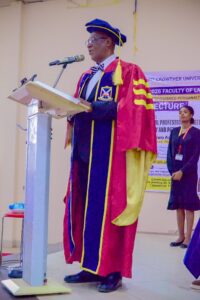


He urged future lawyers to respect the institutional identity of the legal profession, referenced some recent judicial interventions, and further described the legal profession in Nigeria as one indivisible, statutorily protected family.
Prof. Osipitan, whose connection to Oyo dates back more than five decades to when he was a student at Olivet Baptist High School, Olivet Heights, delivered his address with characteristic scholarly depth. He traced the historical development of the legal profession across three distinct periods of 1876 to 1914, 1914 to 1962, and the post 1962 era.
Opening the historical evolution from the colonial foundations, the guest lecturer examined the first statutory expression of legal practice in Nigeria through the Supreme Court Ordinance of 1876, which established a tripartite classification of persons permitted to practice law as professionally qualified legal practitioners, articled clerks, and local attorneys. He noted that Christopher Sapara-Williams was the first Nigerian barrister called to the English Bar in 1879, and was later joined by other legal pioneers, including Sir Kitoye Ajasa, Edmund Macaulay, and Eric Olawole Moore.
The second phase, spanning 1914 to 1962, marked a regulatory shift following the amalgamation of the Northern and Southern Protectorates. Legal practice was restricted exclusively to professionally qualified lawyers who had qualified in Britain, with the gates closed to articled clerks and local attorneys.
He however said that by the mid-20th century, reliance on British institutional training had revealed systemic deficiencies, including functional mismatch, curricular irrelevance, and absence of vocational training. This prompted the appointment of the Unsworth Committee in April 1959, whose revolutionary recommendations laid the groundwork for modern legal practice.

“Nigeria must establish its own autonomous system of legal education,” Prof. Osipitan noted, paraphrasing the committee’s first recommendation. This, according to him, led to the enactment of the Legal Education Act of 1962 and the Legal Practitioners Act of 1962, with the Nigerian Law School commencing operations in January 1963.
Furthermore, Prof. Osipitan meticulously outlined the contemporary pathway to the legal profession, beginning with undergraduate legal education through accredited Nigerian universities. He detailed the rigorous requirements of the LL.B programme, the role of the Joint Admissions and Matriculation Board (JAMB), and the five-year curriculum encompassing core subjects from Nigerian Legal System to Jurisprudence and Legal Theory.
The distinguished professor examined Stage Two, the Nigerian Law School, and Stage Three, the Call to the Nigerian Bar by the Body of Benchers, which represents formal admission into the profession, with new lawyers receiving their Call Certificate and being enrolled as Barristers and Solicitors of the Supreme Court of Nigeria.
Prof. Osipitan peaked the lecture by unveiling the vast career opportunities available to legal practitioners, challenging the conventional notion that law graduates are limited to courtroom advocacy. He warned fresh graduates against immediately establishing solo practices, adding that “bypassing structured mentorship to set up a solo practice immediately post-Call is professional suicide.”
He drew attention to emerging career frontiers in legal technology (Legaltech), data protection and privacy law, cybersecurity law, and fintech and blockchain regulation, stating that growth in these sectors has generated substantial demand for lawyers advising on licensing, regulatory compliance, payments law, and cryptocurrency regulation. “To command authority, you must obtain globally recognized specialized certifications, such as the Certified Information Privacy Professional (CIPP) designation,” he added.
The lecturer addressed judicial career progression, from magistracy to the High Court bench, Court of Appeal, and Supreme Court, and noted the constitutional qualifications for judicial appointments. He commended the current Chief Justice of Nigeria, Justice Kudirat Kekere-Ekun, for demonstrating a strong commitment to the modernisation of judicial processes.
Concluding on the regulatory framework and ethical imperatives of the legal profession, the lecture examined the legislative framework governing the profession, while he emphasised that the profession’s sustainability depends on ethical leadership. “The legal profession differs fundamentally from ordinary commercial enterprise. Lawyers are neither traders nor business men/women; lawyers are professionals. The legal profession is a public calling,” he said.
The lecture drew a distinguished audience, including the Pro-Chancellor and Chairman of the Governing Council of Ajayi Crowther University, Dr. Oluwatoyin Okeowo; Vice-Chancellor, Prof. Ebunoluwa Oduwole; and Dean of the Faculty of Law, Prof. Olanrewaju Onadeko, SAN, who in their various addresses charged the students to pay attention and take the optimal advantage of the lecture to learn.
Other guests present at the lecture were members of the university’s governing council, academics, and students, alongside a delegation from the University of Lagos.