
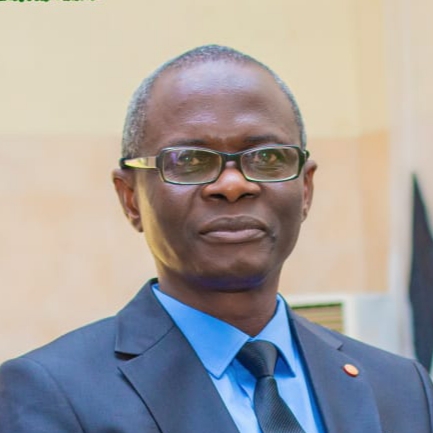
International Criminal Justice Day: ACU’s Prof. Okwezuzu Canvasses Criminalisation of Ecocide
The Head of Department, Public and International Law, Ajayi Crowther University (ACU), Oyo, Prof. Gaius Okwezuzu, has called for the recognition of ecocide -severe, large-scale, and extensive environmental destruction – as the fifth international crime against peace, arguing that current legal frameworks are inadequate to address the growing threat of environmental degradation to human survival.
Prof. Okwezuzu, a renowned Nigerian legal scholar and Executive Director of End Ecocide Nigeria, made the call while delivering the keynote address at a webinar commemorating International Criminal Justice Day 2026.
The webinar, held on Friday, 17th July 2026, was organised by the Department of Jurisprudence and International Law, University of Ilorin, in collaboration with the International Law Association (ILA) Nigeria Committee on the Teaching of International Law and Sustainable Development Goals (SDGs).
In his address titled “Evaluating Environmental Destruction (Ecocide) as a Crime against Humanity,” Prof. Okwezuzu defined ecocide as “severe, long-term, and large-scale environmental destruction,” noting that it currently constitutes a grave threat to human survival on Earth. According to him, such act is a “genocide in disguise” or “environmental genocide,” which a number of scholars have termed ecocide.
“It is unfortunate that while the international community has devised measures that are grievous and somewhat effective in tackling real and manifest instances of genocide internationally and in different nations of the world, similar measures are seemingly lacking in the case of environmental genocide or ecocide,” Prof. Okwezuzu lamented.
He therefore proposed the recognition of ecocide as the fifth Crime against Peace to be included in the Rome Statute through amendment, thereby bringing it under the jurisdiction of the International Criminal Court (ICC).
The scholar noted that there is now a renewed campaign to criminalise ecocide in international law, led by Stop Ecocide International, with appreciable progress recorded, stating that the proposal to include the crime of ecocide in the Rome Statute has been made, and that certain States as well as the region of Europe have recently criminalised ecocide.
Prof. Okwezuzu outlined several benefits of criminalising ecocide, including deterrence and security, as well as a level playing field and innovation. He also acknowledged significant challenges facing the criminalisation of ecocide, such as the challenge of establishing a universally acceptable definition of ecocide, the challenge and limitation of creating ecocide law, political and economic resistance, and the presence of certain major polluters that are not State Parties to the Rome Statute.
The legal scholar concluded his presentation by recommending that the crime of ecocide should be recognised internationally, regionally, and locally; that all regions on earth should put in place mechanisms for recognising the crime of ecocide, following the example of Europe; that all States should enact ecocide law in their different jurisdictions for more effective tackling of environmental degradation; and that major industrialised States which are not Parties to the Rome Statute should take appropriate steps to ratify it.
The webinar featured a panel session with distinguished discussants and dignitaries from within and outside the country. Meanwhile, in a letter of appreciation dated 21 July 2026 addressed to Prof. Okwezuzu by the International Law Association (ILA), he was commended for his keynote address, which was described as providing “key insights and fresh perspectives on the discourse on ecocide.”